Storm season plumbing in Brisbane needs attention before the first warning appears on the radar. A blocked downpipe or slow stormwater drain may cope with light rain, then overflow when a summer storm drops heavy rain within minutes.
Brisbane City Council recommends preparing homes in August and September, ahead of the summer storm season from October to March. The broader wet season can continue into April, bringing repeated rain, saturated ground, and little time for drainage systems to recover.
Working through this checklist now can help prevent ceiling leaks, flooded yards, sewage backflow, and emergency pipe repairs. It also gives you time to fix small issues before plumbers become busy during widespread storm damage.
Key Takeaways
- Clear gutters, downpipes, stormwater pits, and surface grates before spring debris builds up.
- Test accessible drains with controlled water and investigate any slow drainage.
- Watch for gurgling, sewer odours, damp patches, and ground movement.
- Locate the main water shut-off valve before an emergency.
- Leave sewer clearing, underground repairs, and regulated plumbing work to a licensed plumber.
Why Brisbane Storm Season is Hard on Plumbing
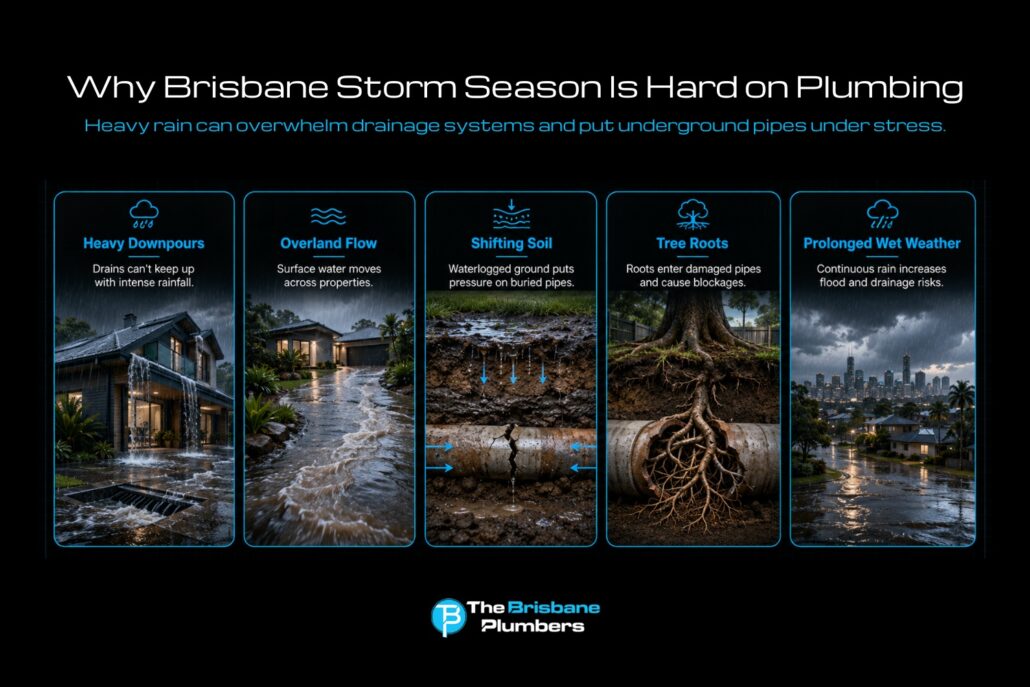
Brisbane storms often arrive as intense afternoon downpours. Heavy rain can run from roofs, driveways, and gardens faster than restricted drains can carry it away.
Overland flow is also Brisbane’s most common summer flood type. Water can cross properties that are not besides a river or creek, especially where roads, fences, landscaping, and buildings redirect its path.
Repeated rain creates another problem. Waterlogged soil can move around buried pipes, especially where reactive clay expands when wet. Older joints may shift, cracks can widen, and low sections can hold sediment.
Tree roots add pressure in established suburbs. Moreton Bay figs, poincianas, paperbarks, and other mature trees can send roots towards moisture around damaged pipes.
Roots usually enter through an existing crack or loose joint. They can then grow inside the line and catch leaves, paper, and other debris.
La Niña periods can extend wet conditions across South East Queensland. The 2011 and 2022 floods remain strong reminders that drainage problems can develop beyond one severe thunderstorm.
A system may stay saturated for days while river, creek, and overland flow risks continue to change.
Pre-Season Plumbing Inspection Checklist
Print or save this section and work through each item before October.
Gutters and Downpipes
1. Clear leaves, twigs, and seed pods from the gutters
Remove built-up debris before summer rain arrives. Jacarandas and poincianas can drop flowers, seed pods, and leaves around the start of storm season.
Packed material holds water, reduces gutter capacity, and can send overflow into eaves or roof spaces.
Only work from a ladder or roof when conditions are dry and access is safe. Arrange professional help where there is a fall risk.
2. Test each downpipe with controlled water
Run a garden hose into the gutter near each outlet and watch how quickly the water clears. Water that pools, bubbles, or spills over may indicate a partial blockage.
Our blocked downpipe service can clear deeper obstructions and inspect the connected stormwater line.
3. Inspect brackets, joints, and exposed sections
Check for rust, cracks, loose brackets, and disconnected joints. A downpipe that shifts during strong wind can release roof water besides walls and footings instead of carrying it away.
Look for staining beneath joints. This may show that water already escapes during rain.
4. Check the stormwater outlet near the boundary
Remove leaves, soil, and rubbish from the lawful discharge point where it is safely accessible.
Do not alter the outlet or direct water onto a neighbouring property. Contact Brisbane City Council when the blockage appears to be within public stormwater infrastructure.
Stormwater Drains
5. Clear every stormwater pit, grate, and channel drain
Check drains around driveways, patios, garages, courtyards, and low points in the yard. Remove surface debris that the first downpour could wash into the pipe.
Never enter a pit or confined drainage space.
6. Test accessible stormwater drains
Run a moderate flow of water into each grate. The water should drain without rising, bubbling, or reappearing elsewhere.
Slow drainage often means the pipe is partly restricted by leaves, sediment, roots, or damage. A blocked stormwater drain inspection can locate the obstruction before heavy rain exposes it.
7. Check how the ground directs water
Water should move away from the house rather than towards doors, foundations, or subfloor areas.
Look for soil settlement, sunken paving, and garden edging that traps runoff. A plumber can assess drainage fixtures, while a suitably qualified drainage or landscaping professional may be needed for broader surface grading.
Sewer and Internal Drains
8. Test laundry, bathroom, and garage floor drains
Pour water into drains that are rarely used and confirm it clears freely. A dry trap may also allow sewer odours into the home, so restoring the water seal can solve some smells.
Stop testing if water rises or appears through another fixture.
9. Listen for gurgling and check for odours
One slow fixture may have a local blockage. Several slow fixtures, gurgling toilets, or sewage smells can point to a developing sewer problem.
Do not open or attempt to clear underground sewer lines yourself. Queensland requires regulated plumbing and drainage work to be completed by an appropriately licensed plumber or drainer.
10. Consider a CCTV sewer inspection near large trees
A camera inspection can identify roots, broken joints, cracks, low sections, and collapsed pipes.
It is worth considering when blockages return, the property has older drainage, or large trees grow near the sewer route.
Our Brisbane sewer repair team can diagnose the fault and explain whether cleaning, patching, relining, or replacement is suitable.
Pipes and Hot Water
11. Inspect visible pipework
Check accessible pipes under the house, besides external walls, and within a safely accessible roof space.
Look for corrosion, movement, staining, loose clips, and previous repairs. Do not touch electrical equipment or enter a roof space during hot, wet, or stormy conditions.
12. Check insulation around exposed pipes
Damaged pipe lagging can leave pipework exposed to temperature changes and physical damage.
Replace loose insulation only where the task is safe and does not involve regulated work. Ask a plumber to assess corrosion, leaking joints, or damaged water lines.
13. Locate and test the main water shut-off valve
Every adult in the household should know where the valve is located, usually near the water metre. Keep the area accessible and make sure the valve turns freely.
Do not force a seized valve. Ask a plumber to repair it before storm season.
If a storm causes a burst pipe, shutting off the water quickly can limit damage.
Roof and Flashings
14. Check visible roof flashings from a safe position
Look for lifting, gaps, or cracks around chimneys, skylights, vents, and roof edges.
Damaged flashing can let wind-driven rain enter the roof space and appear as a plumbing leak. Lead flashing and roof plumbing repairs should be handled by a properly licensed professional.
15. Inspect the roof space after steady rain
When the weather is clear and access is safe, check for damp timber, water stains, wet insulation, or musty smells.
Early signs of water entry can appear before a ceiling develops a visible patch. Do not enter if electrical wiring is wet or the structure appears damaged.
What to do During a Brisbane Storm
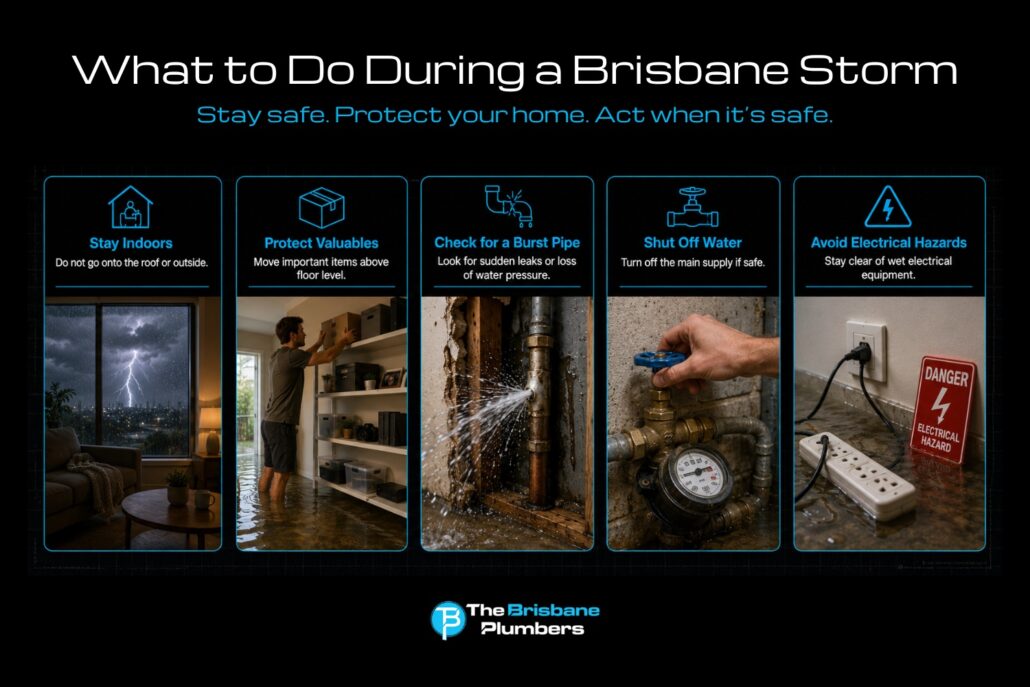
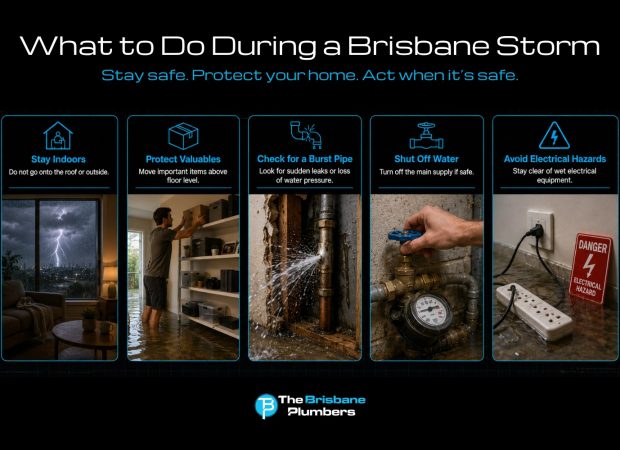
- Do not go onto the roof or outside to clear drains during lightning, hail, strong wind or flooding.
- Move valuables above floor level if water begins entering the house.
- Check for a burst pipe if you hear a bang, notice sudden water flow, or lose water pressure.
- Turn off the main water supply when a pipe has burst and it is safe to reach the valve.
- Keep away from wet electrical equipment. Contact emergency services when there is an immediate safety risk.
For a pipe failure during severe weather, follow our guide on what to do when a pipe bursts.
Post-Storm Damage Signs to Check
Wait until the storm has passed and conditions are safe. Then check the property for the following warning signs.
- Wet walls or ceilings: Water may have entered through roof flashing, overflowing gutters, or moved pipework.
- Gurgling drains: The sewer or stormwater system may be restricted, overloaded, or holding trapped air.
- Soft or sunken ground: Subsidence near external pipes can indicate soil washout, leakage, or pipe movement.
- Discoloured tap water: Brief discolouration may follow supply disturbance, but water that does not clear needs investigation. Avoid drinking water that appears or smells unusual until the cause is confirmed.
- Failed hot water: Floodwater or electrical interruption may affect the system. Do not restart a wet unit. Arrange an inspection by the correct licensed trade.
- New sewer odours: Sewage smells, wastewater rising through floor drains, or toilets bubbling after rain require prompt attention.
- Take photos before cleaning or repairs where an insurance claim may be needed.
When to Call an Emergency Plumber in Brisbane
Call an emergency plumber immediately when a pipe has burst, sewage is entering the property, the home has lost its water supply, or internal flooding is continuing.
Contact a plumber within 24 hours when several fixtures drain slowly, discoloured water does not clear, or the hot water system stops working after the storm.
Water pooling over a private drain long after the rain ends also needs investigation.
Book a pre-season inspection when any checklist item is uncertain. A partial blockage or loose joint is usually easier to address before heavy rain turns it into an emergency.
The Brisbane Plumbers provide 24/7 emergency plumbing across Brisbane. We respond to burst pipes, blocked drains, sewer problems, stormwater failures, and hot water faults.
Our current service number is 1300 847 094, and we aim to respond within 60 minutes.
Storm Season Plumbing Brisbane FAQs
How often should Brisbane gutters be cleaned during storm season?
Most homes should have gutters checked before storm season and again after periods of heavy leaf or seed-pod fall. Properties surrounded by jacarandas, poincianas, or other large trees may need more frequent cleaning between October and April.
Can heavy rain affect a rainwater tank system?
Yes. Debris can block inlet screens, first-flush devices, and overflow pipes, while an overflowing tank can cause pooling around the property. Check that screens are clean, overflows are unobstructed, and pumps remain protected from floodwater.
Does Brisbane City Council clear stormwater drains on private property?
Brisbane City Council maintains public stormwater infrastructure. Homeowners are usually responsible for drains, pits, and pipework within their property, as well as the private connection to the approved discharge point.
A plumber can help identify whether a blockage is within the private system or Council infrastructure.
Coverage depends on the policy and the cause of the damage. Insurers may distinguish between sudden storm damage, flooding, poor maintenance, and gradual deterioration.
Photograph the damage, keep plumbing reports, and contact the insurer before arranging permanent repairs where possible.
Who is responsible for stormwater plumbing in a Brisbane rental property?
The property owner is responsible for maintaining plumbing and drainage affected by age, wear, or structural faults. Tenants should report slow drains, leaks, and storm damage as soon as they notice them.
Responsibility may differ when damage results from misuse or a tenant-caused blockage.
Can landscaping make stormwater problems worse?
Yes. Raised garden beds, retaining walls, paving, and soil buildup can redirect water towards the house or cover drainage outlets. Mulch, gravel, and garden waste may also wash into nearby grates during heavy rain.
Any landscaping changes should preserve a clear path for water to move away from the building.
Should a home be inspected even if it has never flooded?
A property can still develop blocked drains, damaged joints, or gutter problems without a history of flooding. Renovations, tree growth, soil movement, and ageing pipes can change how the drainage system performs.
A pre-season inspection is particularly useful for older homes or properties surrounded by mature trees.
Back to Top : Storm Season Plumbing Brisbane | Get Your Home Ready Before the Wet Season