
A pipe bursts in your bathroom. Water leaks through your ceiling from the unit above. The common area drain blocks and backs up. In each scenario, someone needs to pay for repairs—but is it you, the body corporate, or your neighbour? The answer isn’t always obvious, and getting it wrong can mean spending hundreds or thousands of dollars you shouldn’t have to.
Body corporate plumbing responsibilities trip up owners constantly because the dividing line between individual and shared responsibility isn’t intuitive. A leak might be your problem even though the pipe is in a common wall. Or the body corporate might be liable for repairs inside your unit if the issue originated in shared infrastructure. These gray areas lead to disputes, delayed repairs, and frustration when you’re dealing with water damage that needs immediate attention.
Now, you’ll see exactly which plumbing issues fall on you as the owner, which ones the body corporate must handle, and what happens in those tricky situations where responsibility overlaps. Because when a plumbing emergency hits, you need clear answers fast—not vague bylaws and arguments about who should call the plumber.
Key Takeaways
- The body corporate covers plumbing in shared spaces—water mains feeding the building, sewer lines collecting from multiple units, communal drainage systems, and any pipes running through common property
- You’re responsible for plumbing entirely within your unit’s boundaries, including taps, toilet internals, sink drains, shower fixtures, and any pipes that serve only your lot
- Understanding where responsibility splits saves you from paying for repairs the body corporate should cover (or arguing about bills when you genuinely are liable)
- Queensland’s Body Corporate and Community Management Act 1997 defines these boundaries legally, but your specific strata bylaws can add extra detail about gray areas
- When plumbing issues arise, quick communication between owners and the body corporate prevents small problems turning into major water damage and costly disputes over who pays
What does the Body Corporate Actually Handle?
Your body corporate is the governing entity that manages everything shared between owners in your strata scheme—common areas, building exteriors, and crucially, shared infrastructure like plumbing systems. When it comes to plumbing, the body corporate is responsible for anything that serves multiple units or runs through common property.
This means water supply pipes that feed multiple apartments, sewer lines collecting waste from the entire building, stormwater drainage systems in common areas, and any plumbing infrastructure located in shared spaces like underground car parks or between floors. If a pipe services more than just your unit, it’s generally the body corporate’s problem.
Here’s a practical example: say a pipe bursts inside a common wall between your unit and your neighbour’s. Even though the water damage appears in your bathroom, the body corporate handles the repair because that pipe is shared infrastructure. They organize the plumber, they pay the bill, and they manage any remediation work needed in common areas. The same applies if the main sewer line blocks—that’s shared plumbing serving the whole building, so the body corporate covers it.
What do Lot Owners Manage in Terms of Plumbing?
Lot owners are responsible for the maintenance and repair of plumbing systems within their own units. This includes fixtures like sinks, taps, and toilets. Any plumbing that is installed solely for the benefit of a specific lot owner, such as a custom bathroom, falls under their responsibility.
For instance, if a plumbing issue like a clogged toilet arises in a unit, property owners have the responsibility to fix it. Similarly, water damage caused by plumbing failure inside the unit would be covered by the lot owner, not the body corporate.
How are Costs Divided Between the Body Corporate and Lot Owners?
The body corporate is responsible for maintaining and repairing plumbing in common property areas, such as pipes and systems that service multiple units. However, lot owners are responsible for plumbing repairs inside their own units, including minor plumbing issues like a leaky faucet or blocked drain.
If a plumbing issue in common property (e.g., a burst water pipe) affects multiple lot owners, the body corporate will pay for the repair and maintenance costs. But if the plumbing issue is confined to one unit, the lot owner will bear the cost.
When is the Body Corporate Responsible for Plumbing?
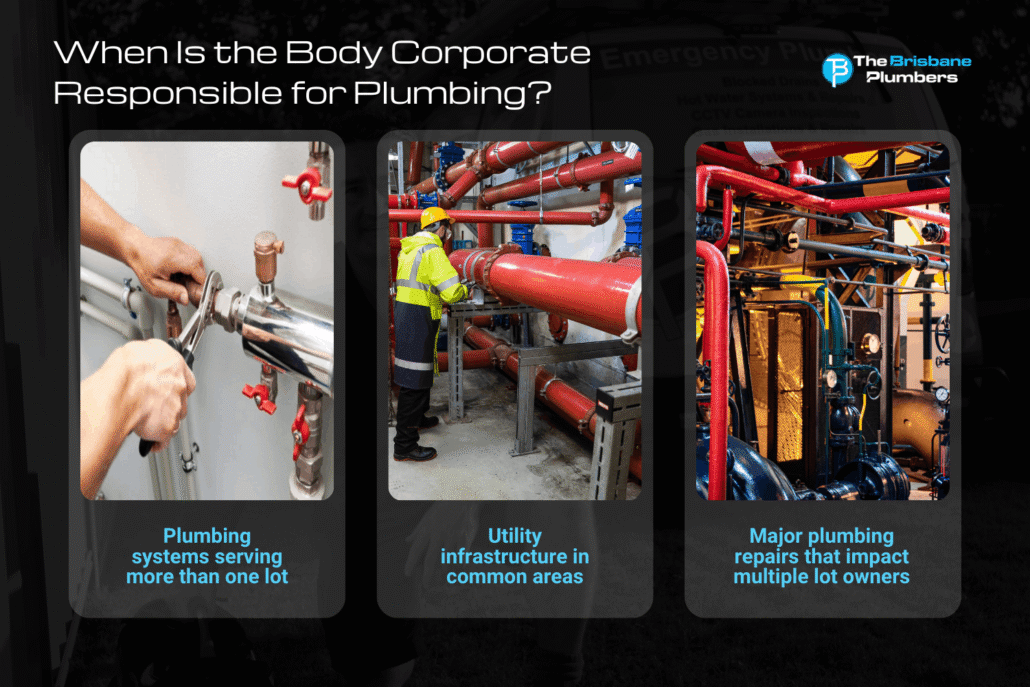
The body corporate is responsible for plumbing issues that affect common property or multiple units. For example:
- Plumbing systems serving more than one lot.
- Utility infrastructure located in common areas, such as water mains, sewerage lines, or shared drainage systems.
- Major plumbing repairs that impact multiple lot owners.
In cases where a burst pipe or plumbing issue in a common area causes disruption or damage, the body corporate must handle the repairs.
When is the Lot Owner Responsible for Plumbing?
Lot owners are generally responsible for plumbing inside their own units, including:
- Repair and maintenance of fixtures like sinks, taps, and toilets.
- Minor plumbing issues like blocked drains or leaking taps.
- Plumbing installations that serve only the individual unit.
If a plumbing issue inside a unit causes damage to other units or common property, the lot owner may be required to pay for repairs.
How Can You Resolve Plumbing Disputes Between Body Corporate and Lot Owners?
Plumbing disputes can arise when it’s unclear whether the issue falls under the body corporate’s responsibility or the lot owner’s responsibility. To resolve disputes, review your body corporate agreement, which should outline who is responsible for what.
If the situation remains unclear, it is advisable to contact a strata manager or a professional plumber familiar with strata plumbing regulations. They can assess the problem and clarify which party is responsible for the repairs.
Stay Informed, Stay Covered
Understanding body corporate plumbing responsibilities is essential for both lot owners and the body corporate. The body corporate is responsible for maintaining and repairing plumbing systems in common areas, while lot owners manage plumbing issues inside their individual units. Having a clear understanding of these responsibilities can prevent unnecessary disputes and ensure plumbing issues are addressed promptly and correctly.
If you’re experiencing plumbing problems in your strata property or need help navigating these responsibilities, contact us today. Our expert team can provide the clarity and professional service you need to resolve any plumbing issues efficiently.
Body Corporate Plumbing Responsibilities FAQs
What happens if plumbing issues affect both common property and individual units?
If plumbing issues affect both common property and a unit, the body corporate will cover repairs for shared plumbing, while the lot owner is responsible for plumbing repairs inside their unit.
Can I hire my own plumber for body corporate plumbing issues?
Generally, the body corporate will have preferred plumbers or contractors for repairs involving common property plumbing. It’s best to follow strata management services procedures to ensure compliance.
The body corporate is responsible for plumbing related to shared amenities, such as pool systems, irrigation systems, and plumbing in common areas.
Back to Top: Body Corporate Plumbing Responsibilities | Who Actually Pays When Plumbing Goes Wrong in Your Strata?