Commercial plumbing problems can disrupt far more than a pipe or a fixture. In a business setting, one plumbing issue can affect staff, customers, tenants, hygiene, trading hours, and your bottom line. The longer it is left, the more expensive and disruptive it usually becomes.
At The Brisbane Plumbers, we help Brisbane businesses deal with plumbing issues before they grow into major shutdowns, repair bills, or repeat callouts. If your property is already showing signs of a plumbing problem, call 1300 847 094 or get a quick quote and have it checked properly.
Key Takeaways
- Commercial plumbing problems tend to escalate faster because more people rely on the system every day.
- The most common issues include blocked drains, leaking pipes, toilet problems, hot water faults, low water pressure, and sewer-related issues.
- Small warning signs like bad smells, slow drains, damp walls, and noisy pipes should not be ignored.
- Preventative maintenance is one of the best ways to reduce downtime and avoid emergency plumbing costs.
- Fast diagnosis matters, especially in restaurants, offices, retail spaces, strata properties, and other high-use buildings.
What Causes Commercial Plumbing Problems?
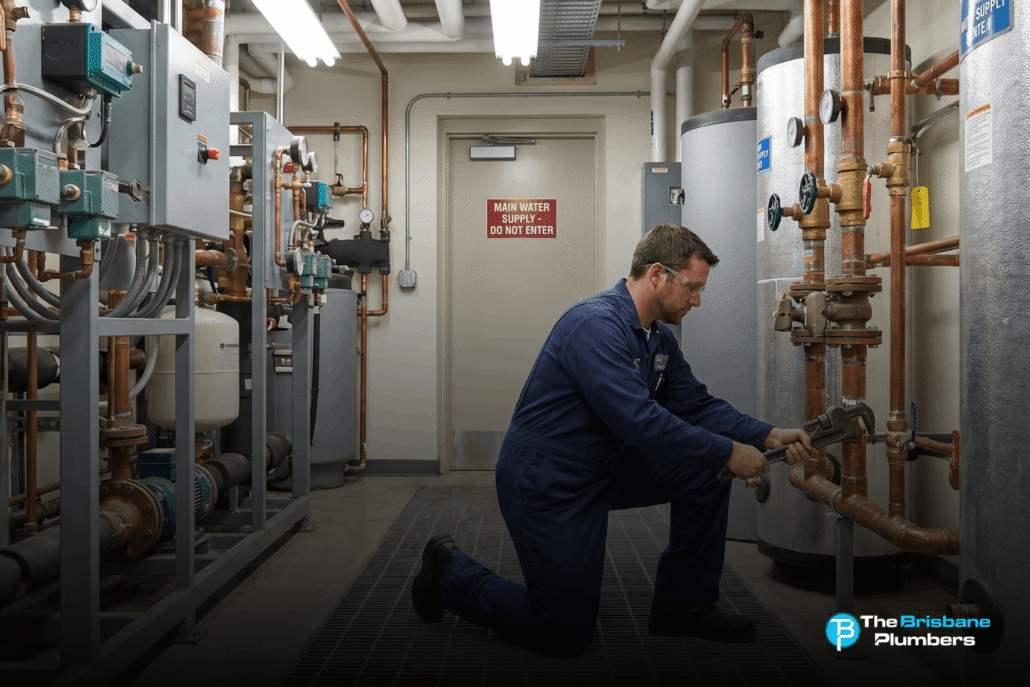
Commercial plumbing problems do not usually happen for just one reason. In many cases, they develop through a combination of heavy usage, poor maintenance, ageing infrastructure, and delayed repairs.
High daily usage
Commercial bathrooms, kitchens, and utility areas are used far more heavily than residential ones. More use means more wear on fixtures, valves, seals, taps, toilets, and drains.
Incorrect disposal habits
Grease, food scraps, paper towels, wipes, sanitary products, and other unsuitable materials regularly cause drain and toilet blockages in commercial properties.
Ageing pipes and fittings
Older commercial buildings may have worn pipework, corroded fittings, or fixtures that no longer perform efficiently.
Lack of preventative maintenance
Small issues are easier and cheaper to fix than major failures. Problems often grow when no one notices the warning signs early enough.
Pressure and system complexity
Larger buildings usually have more complex plumbing layouts. Pressure issues, multi-storey pipe runs, and hidden service areas make faults harder to detect without the right tools and experience.
The Most Common Commercial Plumbing Problems
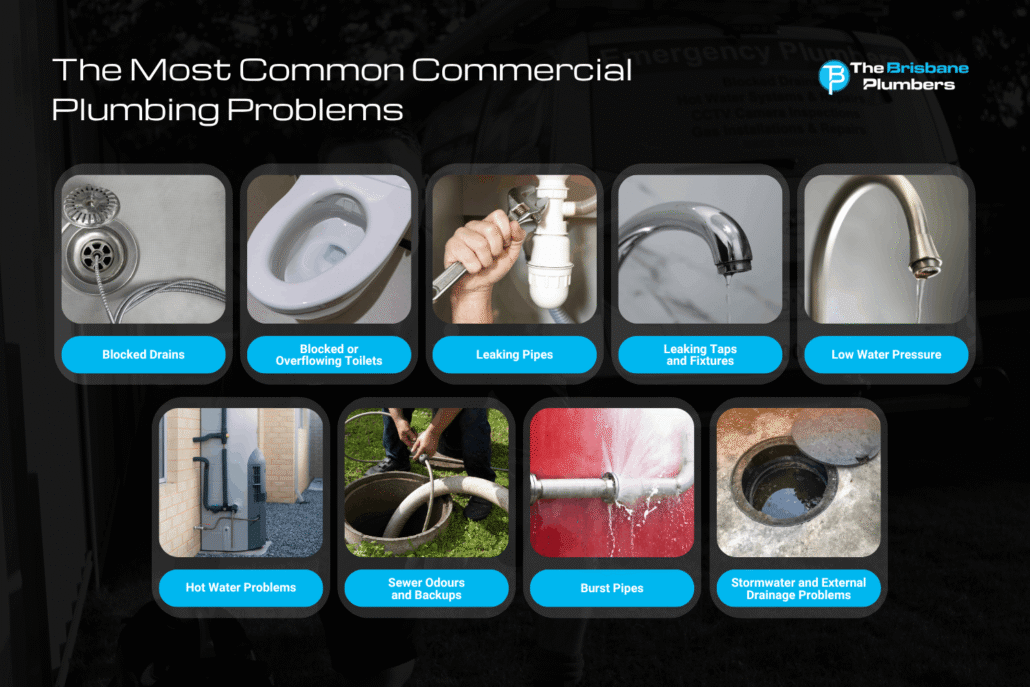
Commercial plumbing problems can affect far more than pipes and fixtures. In a business setting, issues like blocked drains, leaking pipes, poor water pressure, and hot water failures can disrupt daily operations, create hygiene concerns, and lead to costly repairs if left too long. Below are some of the most common commercial plumbing problems businesses face and why they should be dealt with early.
1. Blocked Drains
Blocked drains are one of the most common commercial plumbing problems. In businesses, they can develop faster because of higher usage and a wider range of waste entering the system.
In commercial kitchens, grease, fats, food scraps, and soap residue can build up over time. In office bathrooms and public amenities, toilet paper overload, wipes, sanitary waste, and foreign objects can contribute to blockages.
Signs of a blocked drain can include:
- slow-draining sinks
- foul smells
- gurgling sounds
- overflowing floor wastes
- water backing up into fixtures
A blocked drain may look like a local issue, but it can also point to a bigger sewer or pipe problem further down the line. That is why recurring blockages should always be investigated properly rather than cleared temporarily and forgotten.
2. Blocked or Overflowing Toilets
Toilet issues can be especially disruptive in commercial properties. In homes, one blocked toilet may still leave another available. In a business, even one unusable toilet can create inconvenience for staff and customers and pressure on the rest of the amenities.
Common commercial toilet problems include blocked pans, overflowing bowls, weak flushing, constantly running cisterns, leaking seals, and faulty flush mechanisms.
In public-facing businesses, toilet issues also affect hygiene standards and how customers view the property. A toilet that is out of order, leaking, or overflowing is not just a plumbing fault. It reflects badly on the business as a whole.
3. Leaking Pipes
Leaking pipes are often underestimated because they can go unnoticed for some time, especially when the leak is hidden behind walls, above ceilings, or beneath flooring.
In commercial buildings, hidden leaks can lead to:
- water damage
- mould growth
- stained ceilings and walls
- damaged finishes
- slippery surfaces
- higher water bills
Even a small ongoing leak can cause a lot of damage if it sits in the wrong place long enough. In tenanted properties, it may also affect neighbouring occupancies, not just the original source area.
If you notice damp smells, unexplained moisture, bubbling paint, discoloured ceiling patches, or unexplained water usage, there is a good chance a leak needs attention.
4. Leaking Taps and Fixtures
A dripping tap might not seem urgent, but in a commercial property, small fixture leaks add up. They waste water, create a poor impression, and often signal worn washers, failing components, or pressure-related issues.
This can happen in bathrooms, kitchenettes, staff amenities, medical rooms, hospitality spaces, and utility areas. If several fixtures are leaking or wearing out at once, it may also suggest the property is due for a broader plumbing review.
5. Low Water Pressure
Low water pressure is frustrating in any building, but in a commercial one it can affect handwashing, kitchen work, cleaning routines, bathrooms, showers, and appliance performance.
Sometimes low water pressure is isolated to one fixture. In other cases, it affects larger parts of the building. Causes can include partially blocked pipework, hidden leaks, valve issues, pressure regulation problems, or faults in the wider plumbing layout.
In multi-storey or larger commercial sites, pressure problems can be more complicated because the plumbing system has to serve different areas consistently. If pressure is dropping without a clear reason, it is worth having the system assessed rather than assuming it is normal.
6. Hot Water Problems
Many businesses rely on steady hot water for hygiene, comfort, and day-to-day operations. This is especially true in hospitality, healthcare, gyms, salons, and staff facilities.
Commercial hot water issues can include:
- no hot water
- inconsistent temperatures
- slow recovery
- insufficient supply
- leaking hot water units
- faults in valves or related components
When hot water becomes unreliable, staff routines slow down and service standards can suffer. If the issue is left unresolved, the fault can also put extra strain on the system and increase the risk of total failure.
7. Sewer Odours and Backups
Bad smells should never be ignored in a commercial building. Sewer odours often point to underlying drainage or venting problems, while actual sewer backups require urgent attention.
A sewer-related issue may show up as:
- strong foul odours
- repeated drain backups
- gurgling toilets
- water rising in floor wastes
- waste water appearing where it should not
This type of problem can create serious hygiene concerns and may affect whether parts of the property can continue to operate safely. In restaurants, retail sites, offices, and body corporate properties, sewer issues need fast investigation and the right repair approach.
8. Burst Pipes
Burst pipes are one of the most urgent commercial plumbing emergencies. They can release a large amount of water very quickly and damage walls, ceilings, floors, stock, equipment, and electrical areas.
In some cases, the burst is obvious. In others, it may happen in a less visible section of pipework and only become noticeable once water damage appears elsewhere.
Fast isolation is critical. The sooner the water is shut off and the problem is identified, the better the chance of limiting the damage.
9. Stormwater and External Drainage Problems
Not every commercial plumbing problem is inside the building. External drainage problems can cause just as much disruption, especially during heavy rain.
Blocked stormwater drains, overflowing pits, and poor site drainage can lead to pooling water, access issues, building damage, and pressure on internal drainage systems. If the property already has cracks, tree root intrusion, or damaged underground pipework, wet weather can expose those weaknesses fast.
Warning Signs to Watch For
Many serious plumbing failures start with small signs that are easy to dismiss. The earlier they are investigated, the easier they usually are to resolve.
Watch out for:
- slow drains
- recurring toilet blockages
- damp patches on walls or ceilings
- bad smells near drains or bathrooms
- gurgling pipework
- unusually high water bills
- water stains
- inconsistent hot water
- reduced water pressure
- water pooling around fixtures or outside drains
If your business premises are showing any of these signs, do not wait for the problem to become more obvious. Commercial plumbing faults rarely improve on their own.
How to Prevent Commercial Plumbing Problems
The best way to deal with many commercial plumbing problems is to reduce the chance of them happening in the first place.
Schedule regular plumbing maintenance
Routine inspections help spot wear, leaks, developing blockages, and ageing components before they turn into emergencies.
Act on small warning signs early
A dripping tap, slow drain, or occasional odour may seem minor now, but those are often the first signs of a bigger fault.
Keep drains and toilets used properly
Clear staff guidance can help reduce misuse, especially in kitchens, public bathrooms, and shared amenities.
Have recurring issues investigated properly
If the same drain blocks repeatedly or the same area keeps leaking, the underlying cause has probably not been resolved.
Use the right diagnosis methods
Commercial plumbing systems often need more than guesswork. Accurate fault finding matters, especially in larger or more complex properties.
Need Help With a Commercial Plumbing Problem?
Whether you are dealing with blocked drains, leaking pipes, hot water issues, overflowing toilets, or a burst pipe, our team is here to help. Call 1300 847 094 or contact The Brisbane Plumbers online for fast, professional support in Brisbane.
Commercial Plumbing Problems FAQs
What is the most common commercial plumbing problem?
Blocked drains are among the most common commercial plumbing issues. They happen frequently in kitchens, bathrooms, and high-use amenities because of grease, debris, paper products, and heavy day-to-day use.
Why do plumbing problems get worse so quickly in commercial properties?
Commercial plumbing systems usually deal with more users, more fixtures, and more constant demand. That means faults can escalate faster and affect more people and areas of the property.
When should I call a plumber for a commercial plumbing issue?
You should call a plumber as soon as you notice recurring blockages, leaks, bad smells, low water pressure, hot water issues, or signs of water damage. Waiting usually increases the repair scope and cost.
Can a small leak really cause major damage?
Yes. A small leak can keep spreading behind walls, above ceilings, or under floors without being noticed straight away. Over time, it can damage finishes, create mould issues, and affect other parts of the property.
What businesses are most affected by plumbing problems?
Restaurants, cafés, retail sites, offices, medical spaces, gyms, body corporate properties, and hospitality venues can all be heavily affected because plumbing issues directly impact hygiene, comfort, and daily operations.
How can I reduce the risk of future plumbing problems?
Regular maintenance, early repairs, proper drain use, and professional investigation of recurring issues all help reduce the likelihood of larger plumbing failures later.
Do you handle urgent commercial plumbing problems in Brisbane?
Yes. At The Brisbane Plumbers, we assist with urgent issues such as blocked drains, burst pipes, leaking pipes, hot water problems, and other plumbing faults affecting Brisbane properties.
Back to Top: Commercial Plumbing Problems | Common Issues and Causes